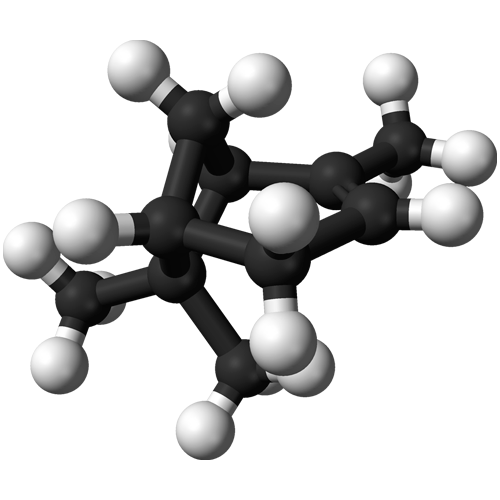
Alpha-pinene is an organic compound known as a "terpene", and is one of the two structural isomers of pinene and one of the most common compounds in nature.
The substance is a typical component of oils and resins of numerous plants, but is most prevalent in conifers and the various species of pine.
The structure of alpha-pinene consists of 10 carbon atoms configured as two isoprene units joined at both ends.
Alpha-pinene is used in traditional Chinese medicine as an anticancer agent. It is also credited with anti-inflammatory, expectorant, bronchodilator and antiseptic properties.
It is used as a raw material in the manufacture of other products such as pine oil, terpinyl acetate, dipentene, terpineol, camphene and campholenic aldehyde, among others.
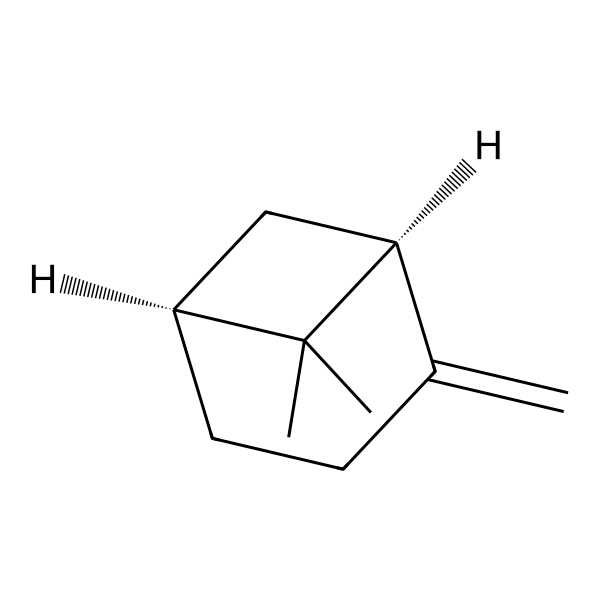
Beta-pinene is an organic compound known as a "terpene", an organic compound found in plants. It is one of the two isomers of pinene, the other being α-pinene. It is a colourless liquid, soluble in alcohol but not in water.
Beta pinene is a refreshing terpene with a strong woody, resinous pine aroma. Isolated beta-pinene can be obtained naturally from the resin of many types of conifers, mainly pine.
It is used as a solvent in formulations for coatings, paints and waxes, as an intermediate for resins, camphene, campholenic aldehyde and terpineol, and as an additive for lubricating oils.
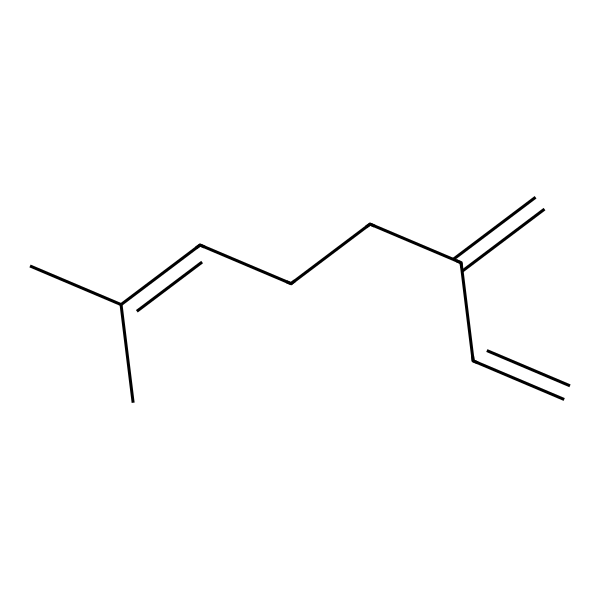
Myrcene, one of the most important chemicals in the perfume industry, is obtained from beta-pinene.
Myrcene is classified as a hydrocarbon; more precisely as a monoterpene. Terpenes are isoprene dimers, and myrcene is one of the most important.
The current route for its industrial production is the pyrolysis (400 °C) of beta pinene, which is in turn obtained from turpentine.
Myrcene is an important intermediate used in the perfume industry. It has a pleasant odour but is rarely used directly. It is also unstable in air and tends to polymerise; samples are stabilised by adding alkylphenols or tocopherol. It is therefore most highly valued as an intermediate for the preparation of flavour and fragrance chemicals such as menthol, citral, citronellol, citronellal, geraniol, nerol and linalool.
Treating myrcene with hydrogen chloride yields geranyl chloride, neryl chloride and linalyl chloride. Treating these compounds with acetate gives geranyl acetate, neryl acetate and linalyl acetate respectively. These esters can then be hydrolysed to the corresponding alcohols.
Myrcene is also converted into myrcenol, another fragrance found in lavender.
Tell us which product you are interested in and we will send you the corresponding data sheet.